Introduction
In recent years, the idea of working from home has shifted from a niche option to a mainstream reality across the UK. What was once considered a perk is now a standard part of many industries, with organisations embracing flexible models and individuals choosing careers that fit their lifestyles.
Today, you do not need to limit yourself to the office or even to one employer. There are salaried roles that bring stability, freelance options that allow you to be your own boss, and hybrid models that combine the two. For many, the appeal lies in creating a career that balances professional growth with personal freedom.
This blog explores exactly what jobs you can do from home in the UK. It highlights the industries offering genuine remote opportunities, provides examples of specific roles, points you towards trusted job boards, and shares practical guidance so you can step confidently into the world of home-based work.
1. The Landscape of Remote Work in the UK
Remote work in the UK is no longer limited to the tech-savvy few. A wide range of industries have embraced flexible and fully remote roles, creating opportunities for people with diverse skills and interests.
- Administration and Support Services: Virtual assistants and remote administrators provide businesses with essential day-to-day support.
- Customer Service: Many organisations now employ home-based customer service advisors to manage enquiries and provide support.
- Technology: IT support, software development, and data analysis are increasingly carried out from anywhere with a strong internet connection.
- Education: Online tutoring has opened up new pathways for teachers and subject specialists to reach students across the country.
- Creative Industries: Writers, bloggers, marketers, and social media managers can thrive in remote-first environments.
- Charity and Nonprofit: Many UK charities list flexible, hybrid, or fully remote roles, ranging from fundraising to project management.
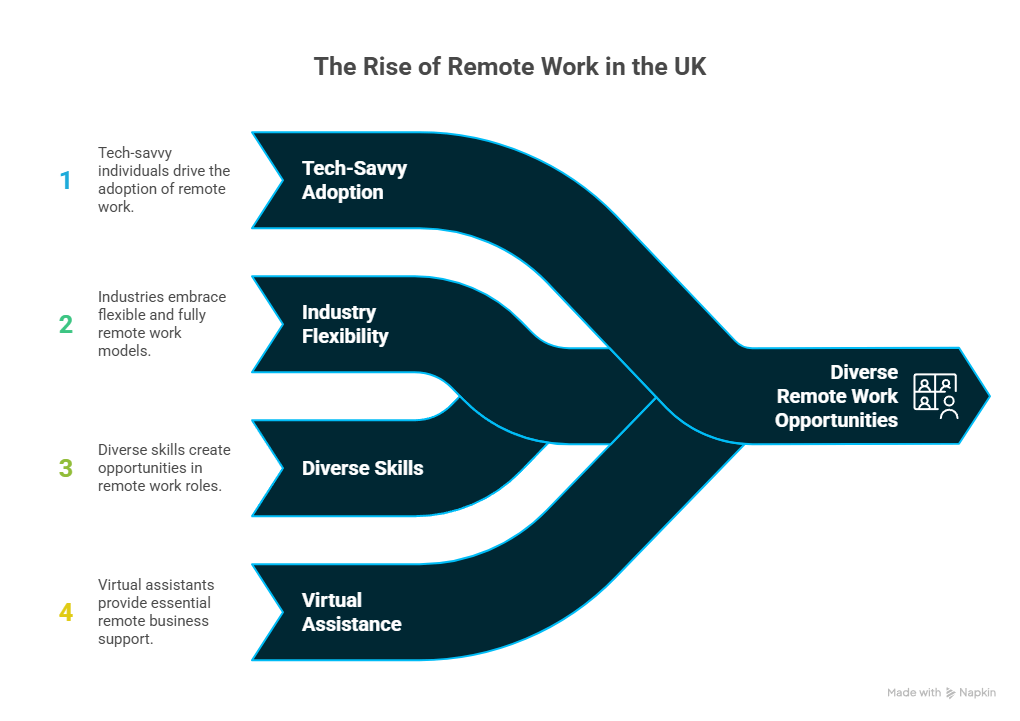
Across these sectors, remote jobs share a few defining characteristics. They often offer flexibility in working hours, enabling professionals to adapt their schedules around personal commitments. They also allow for location independence, meaning that whether you are in a busy city or a quiet village, opportunities remain accessible as long as you have an internet connection. Finally, pay models vary: some roles provide the consistency of a fixed salary, while others operate on a freelance or commission basis, rewarding productivity and independence.
2. Examples of Legitimate Work-from-Home Jobs
Working from home in the UK covers a wide spectrum of roles, from entry-level to highly specialised. Below are some of the most common and legitimate opportunities available.
2.1 Virtual Assistant
Virtual assistants (VAs) provide remote administrative support to businesses and entrepreneurs. Tasks may include managing diaries, handling emails, booking travel, or supporting projects. This role is particularly popular with small business owners who need flexible support without hiring a full-time employee.
2.2 Customer Service Advisor
Many companies now employ home-based customer service advisors to manage enquiries, complaints, and general support. With the right training and a reliable internet connection, you can help customers over phone, email, or live chat, often with flexible shifts.
2.3 Online Tutor
Online tutoring has become a fast-growing area, with opportunities to teach academic subjects, languages, or specialist skills such as music or coding. Lessons are delivered through video calls and platforms that connect tutors with students across the UK and beyond.
2.4 Content Writer or Blogger
Writers are in demand for blogs, websites, and digital marketing. Whether freelance or in-house, content writers craft engaging articles, product descriptions, and social media copy. Blogging also offers the chance to build a personal brand and generate income through advertising or sponsorships.
2.5 Data Analyst
Data analysts help organisations make sense of complex information. Using cloud-based tools, they interpret patterns and present insights that guide business decisions. This role suits individuals with strong analytical skills and a comfort with statistics or software such as Excel, SQL, or Python.
2.6 IT Support or Developer
From troubleshooting technical issues to creating new software, many IT roles can be carried out entirely online. Developers, coders, and support technicians are particularly well-suited to remote work as collaboration tools and cloud systems make location less important.
2.7 Transcriptionist or Translator
If you have strong listening or language skills, transcription and translation work may be ideal. Transcriptionists convert audio recordings into text, while translators work across languages to help individuals and organisations communicate effectively.
2.8 Sales, Marketing, or Social Media Manager
Digital marketing and sales roles are often remote-first. From managing campaigns to driving growth on social media, these positions suit individuals with creativity, communication skills, and a keen eye for audience engagement.
2.9 Charity and Nonprofit Roles
Charities across the UK increasingly offer remote or hybrid jobs. Roles range from fundraising and volunteer coordination to digital communications, giving you the chance to combine meaningful work with flexibility.
3. Where to Find Remote Jobs in the UK
Finding legitimate remote work is easier if you know where to look. Below are some of the most trusted resources for UK job seekers:
- Find A Job (GOV.UK): The official government job board, featuring many verified remote roles.
- Indeed UK: A wide-ranging platform with filters to search for fully or partially remote jobs.
- The Work From Home Hub: A dedicated site focused on remote-first and hybrid opportunities.
- CV-Library: One of the UK’s largest job boards, listing thousands of live work-from-home vacancies.
- Welcome to the Jungle: Offers remote roles across various industries, with detailed company profiles.
- E4S (Employment 4 Students): Specialises in part-time, freelance, and entry-level opportunities, many of which can be done from home.
- CharityJob: The go-to platform for nonprofit and charity positions, with a growing number of remote listings.
- CVHelp: Provides a guide to 13 of the most reliable UK job boards for those exploring flexible and remote careers.
- Virtual Assistant Agencies: Many VA agencies actively recruit assistants to work with their client base. These agencies can be a great entry point for those starting out, offering training, client-matching, and ongoing support.
4. Free Online Resources for Guidance
If you are unsure which direction to take or simply want to explore your options, there are free career resources designed to help UK job seekers.
- Prospects: A comprehensive career platform offering job profiles, skills-matching tools, and advice on training and qualifications. It is particularly useful if you want to understand what skills you already have and how they can transfer into remote work.
- icould: A resource packed with career videos and UK-specific job profiles, including details on pay, entry requirements, and daily responsibilities. This is a good starting point if you want to visualise what different roles actually involve before committing to them.
These tools provide valuable insights and can help you identify which home-based jobs align with your strengths and long-term goals.
5. Things to Watch Out For
While there are many genuine work-from-home opportunities, the remote job market also attracts its share of scams. To stay safe, keep these cautions in mind:
- Avoid upfront fees: Legitimate employers and agencies will never ask you to pay for access to job listings or training before you are hired.
- Be wary of unrealistic promises: Jobs that guarantee instant high earnings or ask for minimal effort are often too good to be true.
- Use trusted sources: Stick to reputable job boards, VA agencies, or established recruitment platforms to minimise risk.
- Check pay rates: Verify that any role you consider offers at least the UK’s national minimum wage. Freelance roles may vary, but even project-based work should be fair and transparent about rates.
By taking these precautions, you can focus your energy on opportunities that are safe, rewarding, and genuinely sustainable.
6. Final Thoughts
The UK has embraced remote work, and there are now more ways than ever to build a career from the comfort of your home. From salaried positions in customer service or IT to freelance roles in writing, tutoring, or virtual assistance, the variety is vast and growing.
The key is to identify roles that suit your skills and lifestyle, explore trusted platforms for opportunities, and remain cautious of offers that seem suspicious. With the right approach, home-based work can provide both professional fulfilment and the freedom to design a career on your own terms.
Frequently Asked Questions
1. What are the best entry-level jobs I can do from home in the UK?
Entry-level options include roles such as customer service advisor, transcriptionist, virtual assistant, and online tutor. Many of these jobs require minimal upfront experience and offer training to get you started.
2. Do I need special equipment to work from home?
In most cases, you only need a reliable computer, a stable internet connection, and a quiet space to work. Certain jobs, such as transcription or IT support, may require specialist software or a headset.
3. Are remote jobs in the UK legitimate?
Yes, many organisations and agencies advertise genuine remote jobs. To stay safe, always apply through reputable job boards, VA agencies, or established recruiters. Avoid roles that ask for upfront payments or make unrealistic promises.
4. Can I work from home part-time instead of full-time?
Absolutely. Many UK employers offer part-time or flexible schedules, particularly in roles like tutoring, content writing, or customer service. Freelance work is also well-suited to part-time arrangements.
5. How much can I earn working from home in the UK?
Earnings vary depending on the role, your experience, and whether you are salaried or freelance. Some jobs, such as customer service, typically pay hourly or at a set salary, while freelance roles like writing or virtual assistance can range widely depending on clients and workload.